
Affiliate Disclosure: This article contains affiliate links. That means if you click through and make a purchase or enquiry, I may earn a commission at no extra cost to you. I only recommend services that may be useful for business owners, bloggers, creators and website owners.
Your logo is often the first visual impression people get of your business. It appears on your website, social media profiles, packaging, invoices, adverts, emails and marketing materials. A strong logo helps your brand look professional, memorable and trustworthy.
But good logo design is not just about making something look nice. It is about creating a visual identity that reflects your business, speaks to your audience and works across every platform.
Get professional logo and website design support here
What Is Logo Design?
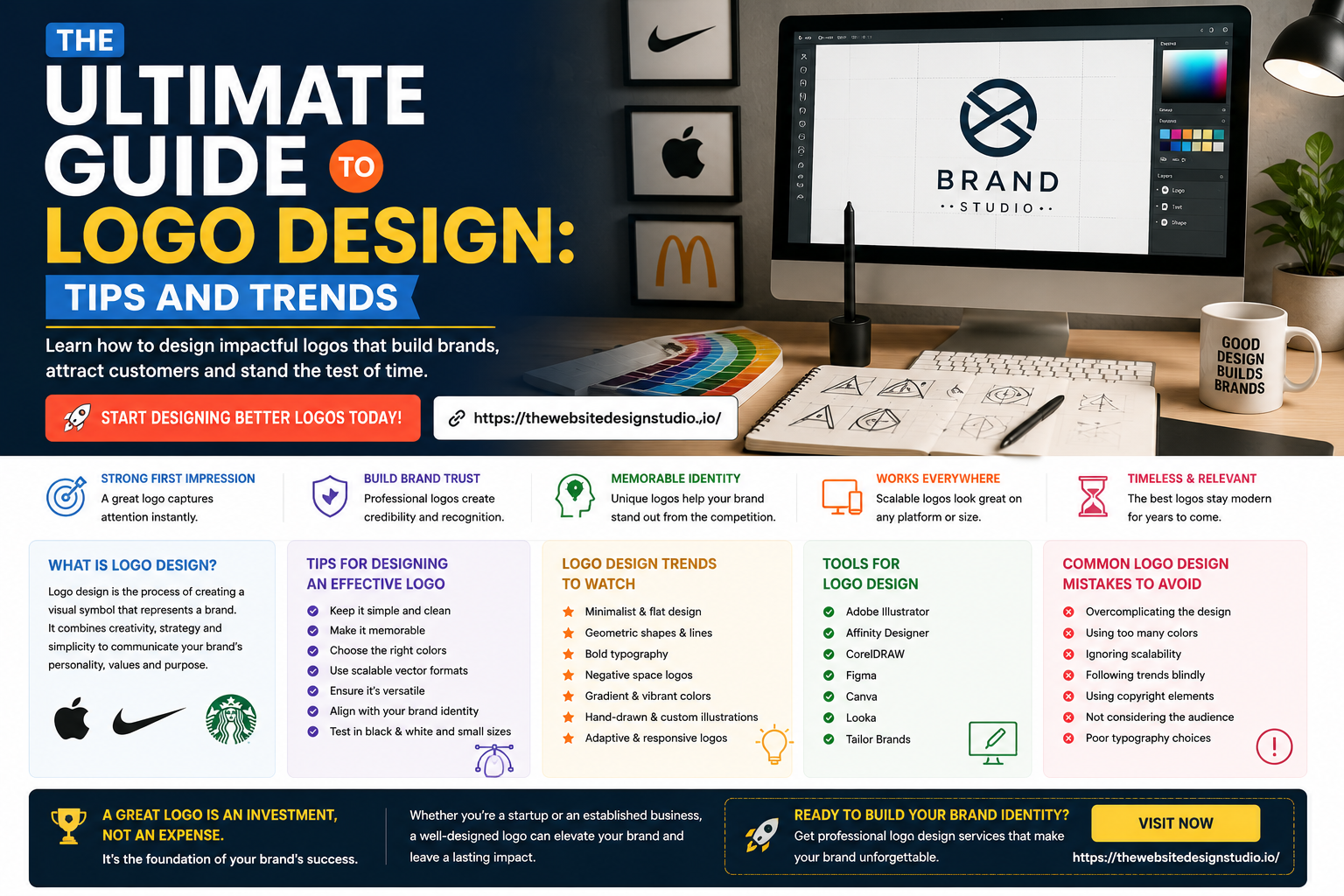
Logo design is the process of creating a visual symbol, wordmark or brand mark that represents a business, organisation, product or personal brand.
A logo can include:
A symbol or icon,
A brand name,
Custom typography,
A colour palette,
A tagline,
A monogram,
A simple graphic mark,
The best logos are clear, flexible and memorable. They should look good on a website header, social media profile image, business card, product label and mobile screen.
Why Logo Design Matters
A logo helps people recognise your brand quickly. It gives your business a visual anchor and helps create consistency across your website, content and marketing.
A professional logo can help you:
Create a strong first impression,
Build brand recognition,
Look more trustworthy,
Stand out from competitors,
Make your website feel more polished,
Support your social media branding,
Create a consistent business identity,
For small businesses, bloggers and startups, a well-designed logo can make your brand feel more established from day one.
Key Logo Design Tips
1. Keep It Simple
Simple logos are usually easier to remember and easier to use. A complicated logo may look impressive at first, but it can become hard to read when scaled down for mobile screens, profile icons or small packaging.
Aim for a design that people can recognise quickly.
2. Make It Scalable
Your logo should work at different sizes. It needs to look clear on a website banner, but also readable as a small favicon, social media profile picture or app icon.
Always test your logo in large and small formats before finalising it.
3. Choose Colours Carefully
Colours influence how people feel about your brand. Blue often feels professional and calm, green can suggest nature or wellbeing, black can feel premium, and bright colours can feel energetic or playful.
Choose colours that match your brand personality and audience.
4. Use Typography with Purpose
Typography can completely change the mood of a logo. Serif fonts may feel classic, refined or trustworthy, while sans-serif fonts often feel modern and clean. CreativeBloq recently noted that many AI brands are using serif typography to feel more human, trusted and distinctive in a market full of similar tech branding.
Your font should be readable, distinctive and aligned with your brand style.
5. Avoid Following Trends Blindly
Trends can inspire your logo, but your logo should not feel outdated after a few months. Use trends carefully and combine them with timeless design principles.
A good logo should feel relevant today and still work years from now.
Logo Design Trends to Watch
1. Smarter Minimalism
Minimalism continues to be popular, but modern minimalist logos are becoming more intentional. Designers are using clean shapes, negative space and subtle symbolism rather than simply removing detail. DesignsClue describes this as a smarter version of minimalism, where simple forms still carry meaning.
2. Bold Typography
Typography-led logos are becoming more expressive. Oversized lettering, unusual letterforms and custom type can help brands look more distinctive while staying easy to recognise. S Creations highlights bold typography as one of the key logo trends for 2025.
3. Motion-Ready Logos
Many brands now need logos that work in video, reels, websites and animated ads. Motion-first logos can include subtle movement, morphing shapes or animated colour shifts. Mucky Puddle notes that animated and motion-focused logos are becoming more useful as video and interactive content dominate digital spaces.
4. Natural and Handmade Details
Some logo trends are moving away from overly polished digital design and toward softer, more organic marks. LogoLounge’s 2025 Logo Trend Report highlights ornamental natural forms, leaves and berry-like details as part of a wider move toward crafted calm.
5. Nostalgic and Retro Influences
Retro-inspired design is still popular, especially 90s and early 2000s influences. These styles can include playful shapes, bright colours, pixel-inspired details and futuristic Y2K energy. Logogenie notes that nostalgic 1990s and 2000s design styles are returning in logo design, particularly with bold, futuristic and tech-inspired looks.
Common Logo Design Mistakes to Avoid
Many businesses make the mistake of creating a logo that is too detailed, too trendy or too hard to read. Others use too many colours, weak typography or generic icons that do not reflect the brand.
Avoid these common mistakes:
Using unreadable fonts,
Adding too many design elements,
Copying competitor logos,
Relying only on trends,
Ignoring mobile display sizes,
Using low-quality image files,
Choosing colours without a brand strategy,
Creating a logo that does not match your audience,
A professional designer can help you avoid these problems and create a logo that fits your brand properly.
What Makes a Great Logo?
A great logo should be:
Simple,
Memorable,
Scalable,
Relevant,
Distinctive,
Versatile,
Easy to recognise,
Aligned with your brand identity,
It should also work in black and white, full colour, small sizes and large formats.
Do You Need a Professional Logo Designer?
You can create a basic logo yourself, especially if you are experimenting with a new idea. But if you are serious about building a brand, launching a business or improving your website, professional logo design can be worth it.
A professional designer can help with:
Brand direction,
Colour choices,
Typography,
Logo variations,
Website-ready files,
Social media logo formats,
Brand consistency,
A more polished final result,
This is especially important if your logo will appear across your website, business cards, packaging, online store, marketing campaigns or digital products.
Final Thoughts
Logo design is one of the most important parts of building a strong brand identity. A good logo should be simple, memorable, flexible and meaningful. It should represent your business clearly and work across every platform where your audience sees you.
Trends such as bold typography, smarter minimalism, motion-ready logos and organic design details can inspire your brand, but the best logos always start with strategy.
Click here to get professional logo and website design support