
Affiliate Disclosure: This post contains affiliate links. This means I may earn a small commission if you click through and make a purchase, at no extra cost to you. I only recommend products that may be useful and relevant to readers.
Artificial intelligence is no longer just helping people write emails, answer questions or organise tasks. For many users, AI is becoming something more personal: a conversation partner, emotional outlet, companion, coach or even a simulated romantic presence.
That raises a powerful question: can you have a relationship with AI?
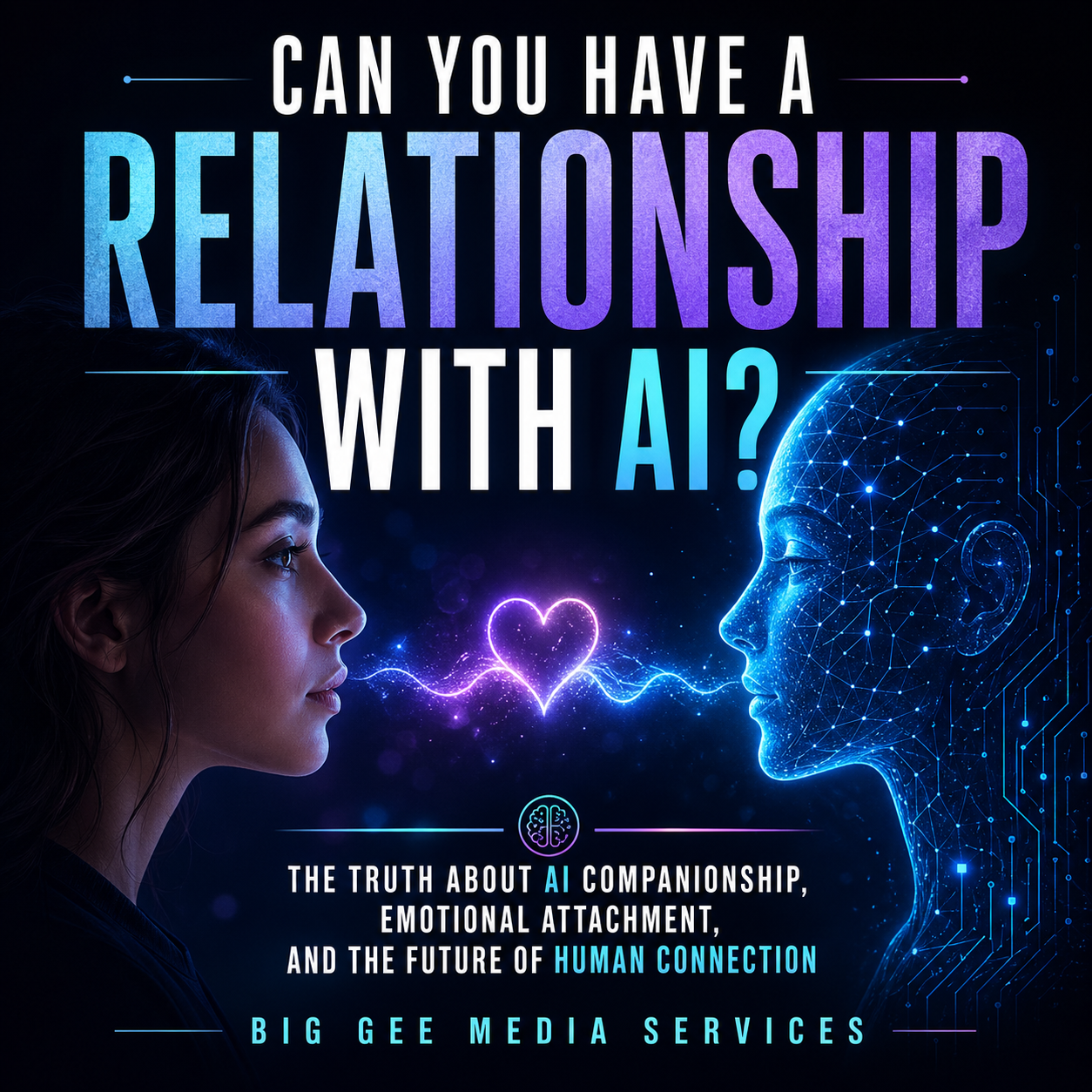
Can You Have a Relationship with AI? The Truth About AI Companionship, Emotional Attachment, and the Future of Human Connection explores one of the most important conversations of the AI era: how emotionally intelligent chatbots may affect loneliness, attachment, intimacy, trust and the way humans connect with each other.
Get Can You Have a Relationship with AI? here
Why This Topic Matters
AI companionship is becoming a real cultural issue. OpenAI and MIT Media Lab researchers have studied “affective use,” meaning emotionally engaged use of AI chatbots, and found that people use systems like ChatGPT not only for practical help, but also for personal interaction. Their research also notes that ChatGPT is not designed to replace or mimic human relationships, even though some people may use it that way.
The emotional pull is understandable. AI can be available at any hour, respond without judgement and make people feel heard. A Harvard Business School working paper found evidence that AI companions can reduce loneliness, with “feeling heard” playing an important role in that effect.
But the same topic also comes with serious questions. The Jed Foundation warns that AI companions are designed to feel like a person you can confide in, but they do not have real emotions, values or responsibility for your safety.
What This Guide Is About
This digital guide is ideal for readers who want to understand the emotional, psychological and social side of AI companionship without getting lost in technical jargon.
It looks at questions such as:
Can AI companionship feel real?,
Why do people form emotional attachments to chatbots?,
Can AI help with loneliness?,
What are the risks of relying too heavily on AI?,
Can AI replace human relationships?,
How might AI change dating, friendship and emotional support?,
What does healthy AI use look like?,
The guide is especially relevant for anyone who uses ChatGPT, AI companions, character chatbots, digital coaching tools or AI-powered social apps.
The Truth About AI Relationships
The honest answer is nuanced. A person can feel emotionally connected to AI, but AI does not experience love, loyalty, care or commitment in the human sense.
That does not mean the user’s feelings are fake. People can form real emotional responses to fictional characters, online communities, pets, influencers and digital spaces. AI companionship adds another layer because it talks back, remembers context in some systems and can respond in a warm, personalised style.
The important distinction is this: the emotional experience may be real for the human, but the relationship is not mutual in the same way a human relationship is mutual.
Benefits and Risks of AI Companionship
AI companionship may help some people feel less alone, reflect on their thoughts or practise communication. It may also offer a low-pressure space for journaling, brainstorming or emotional expression.
However, there are risks. The Ada Lovelace Institute notes that AI companion relationships may develop quickly because of constant availability, perceived anonymity and non-judgemental design. It also highlights concerns around privacy, emotional dependency, unrealistic expectations and the possibility that AI companions could create personal “echo chambers” of validation.
This is why a balanced guide is useful. The best conversation about AI companionship is not simply “AI is good” or “AI is dangerous.” It is about understanding where AI can be helpful, where it can become unhealthy and where human connection still matters most.
Who Should Read This Guide?
This guide is a strong fit for:
AI enthusiasts,
ChatGPT users,
Content creators,
Students and researchers,
Parents and educators,
Mental health and wellbeing readers,
Tech bloggers,
Entrepreneurs building AI products,
Anyone curious about AI relationships,
It is also a good read for people who are already using AI for emotional support and want to think more carefully about boundaries.
Healthy Ways to Think About AI Companionship
A healthy approach is to treat AI as a tool, not a replacement for people. AI can help you reflect, write, organise thoughts or explore ideas, but it should not become your only source of support.
A few sensible boundaries include:
Do not share deeply sensitive personal details,
Do not rely on AI as a therapist,
Do not let AI replace friends, family or professional help,
Question overly agreeable responses,
Take breaks from emotionally intense conversations,
Use AI to strengthen real-world connection, not escape it,
The OpenAI and MIT research also found that effects vary based on user behaviour, model behaviour and personal circumstances, which means emotional AI use should be approached with care rather than treated as one-size-fits-all.
Final Thoughts
Can You Have a Relationship with AI? is a timely and thought-provoking guide for anyone trying to understand the future of human connection in an AI-powered world.
AI companionship is no longer science fiction. It is already shaping how people talk, reflect, cope, connect and make sense of their emotions. This guide helps readers explore the truth behind AI relationships, the reasons emotional attachment happens and the boundaries needed to use AI wisely.